


SHEN Wei
PhD (London School of Economics and Political Science)
KoGuan Distinguished Professor of Law, Shanghai Jiao Tong University
Course Taught: International Financial Regulation, Chinese Investment Law
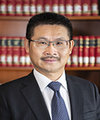
Robin HUANG
Doctor of Philosophy (PhD) in Law, University of New South Wales
Professor of Law, Chinese University of Hong Kong
Course Taught: Capital Markets Law in Asia

Eilis FERRAN
Professor of Company & Securities Law
University of Cambridge
Jones Day Professor of Commercial Law, 2015

Adrian BRIGGS
B.C.L. (First Class Honours), University of Oxford
Professor of Private International Law, University of Oxford
Course Taught: Commercial Conflict of Laws

John PHILLIPS
PhD, University of Queensland
Professor of Law, The Dickson Poon School of Law, King's College London
Course Taught: Banking Law
12 Feb 2020
Dr Ardavan Arzandeh
University of Bristol
How should Exclusive Jurisdiction Clauses in International Trusts be Treated?
5 Feb 2020
Associate Professor Hengameh Saberi
Osgoode Hall Law School
Cynicism in International Law: A modus of Political Agency?
20 Jan 2020
Associate Professor Chen Jianlin
Melbourne Law School
Fraudulent Sex Criminalization in Singapore
19 Nov 2019
Ms Emilia Lundberg
Advokatfirman Lundberg & Gleiss KB
International Arbitration in Sweden
8 Nov 2019
Dr Ryan Catterwell
University of Queensland
The Cognition of Contract Interpretation
31 Oct 2019
Dr Susan Thomas
Indira Gandhi Institute of Development Research
Fintech in India: The state of the art
8 Oct 2019
Dr Maria Adele Carrai
Harvard University of Asia Center
Sovereignty in China. A Genealogy of a Concept since 1840
17 Sep 2019
Dr Orkun Akseli
Durham University
Blockchain and the UNCITRAL Model Law on Secured Transactions: A Question of Compatibility
16 Sep 2019
Professor John Murphy
Lancaster University
Concurrent Liability in Tort and Contract: Un(der)explored Issues
12 Sep 2019
Dr Yarik Kryvoi
University of West London
Public and Private International Adjudication: Process, Substance and Legitimacy
20 Aug 2019
Professor Birke Häcker
University of Oxford
European imprints and the ‘comparative common law’ phenomenon
6 Aug 2019
Mr Torakichi Jesús Oba
EA, CPA, San Diego
US International Taxation Regime – GILTI & Intellectual Property, and Tax Residency: An Overview
5 Aug 2019
Associate Professor Andrea Stazi
European University of Rome
Online Intermediary Liability in Comparative Law
3 Jul 2019
Professor David B. Wilkins
Harvard Law School
Innovation and the Future of Legal Practice
12 Apr 2019
Dr Ardavan Arzandeh
University of Bristol
Forum (Non) Conveniens in England: Past, Present, and Future
27 Mar 2019
Professor A. Kumaralingam
Faculty of Law, National University of Singapore
Prosecutorial Discretion and the Rule of Law
13 Mar 2019
Mr Ow Kim Kit
Partner, Bird and Bird
Mr Vincent Ooi
Lecturer of Law, SMU School of Law
Singapore Variable Capital Economy
27 Feb 2019
Dr Weihuan Zhou
University of New South Wales Law
China's Compliance with the Rulings of the World Trade Organisation
21 Feb 2019
Professor Benjamin Geva
Osgoode Hall Law School of York University, Toronto
The Quickening Pace of Money and Payments Digitisation: Operational and Legal Aspects
30 Jan 2019
Associate Professor Chen Jianlin
Melbourne Law School
Sex and Lies in Asia Pacific: A Comparative Study of Fraudulent Sex Criminalisation in Singapore, Taiwan and Hong Kong
21 Jan 2019
Professor Marco Greggi
Department of Law, University of Ferrara
In Praise of Privacy in the Age of Exchange of Information
27 Nov 2018
Dr Andreas Kokkinis
Warwick Law School
Current Changes in Banking Regulation: A Global Perspective
24 Oct 2018
Judge Sir Howard Morrison QC
Former President, Judge of the Appeals Division of the International Criminal Court
International Criminal Law - A Road Less Taken
11 Oct 2018
Dilan Thampapillai
Australian National University
Can Copyright Protect Works Created by Artificial Intelligence?
11 Sep 2018
Dr Mark Bennett
Faculty of Law, Victoria University of Wellington
When Does a 'Trust Deed' Not Create a Trust? Recent Developments in the 'Illusory Trust' Doctrine.
5 Sep 2018
Professor Jo Shaw
Salvese Chair of European Institutions; School of Law, University of Edinburgh
Citizenship and Constitutional Law: Reflections on a Complex Relationship
4 Sep 2018
Robin Hui Huang
Professor of Law, Faculty of Law, Chinese University of Hong Kong
The (Re)Introduction of Dual-Class Share Structures in Hong Kong: A Historical and Comparative Analysis
23 Aug 2018
Dr Yin Huifen
Associate Professor, Shanghai University of Political Science and Law
Consumer Credit and Over-indebtedness in China
23 Aug 2018
Dr Weixia Gu
Associate Professor of Law, University of Hong Kong
The Developing World of Arbitration in the Asia Pacific
16 Aug 2018
Dr Haksoo Ko
Professor of Law, School of Law, Seoul National University
Machine Learning and the Law
14 Aug 2018
Professor Linda MC Schoeman-Malan
Emeritus Professor in the Department of Private Law, Faculty of Law, University of Pretoria
The Ailing Testator
6 Aug 2018
Dr Esther Erlings
Lecturer in Law, Flinders University
Is (Avoiding Confrontation) Positive to Everyone's Life? Or Whether Hong Kong Should Offer Parent-Child Mediation Services to Families in Conflict
27 Jun 2018
James Lee
Reader in English Law, The Dickson Poon School of Law, King's College London
Research Strategies - Thinking Like a Movie Studio
31 May 2018
Professor David McLauchlan
Victoria University of Wellington
Avoided Loss and Mitigation in the UK Supreme Court
26 Apr 2018
Jamie Glister
Companies and Trust
10 Apr 2018
Dr Ardavan Arzandeh
Lecturer in Law, University of Bristol
Reformulating the Common Law Recognition-and-Enforcement Regime
6 Apr 2018
Duc V Trang
Managing Director of Landon Advisory Services; Senior Consultant, Singapore Academy of Law
Rethinking the Education and Training of Law Students and Lawyers: Design-based Pedagogy
27 Mar 2018
Professor Souchirou Kozuka
Professor of Law, Gakushuin University, Tokyo
Associate Professor Helena Whalen-Bridge
Associate Professor, Faculty of Law, National University of Singapore
Comparative Legal Reasoning
22 Mar 2018
Dr Andromachi Georgosouli
Senior Lecturer at the Centre for Commercial Law Studies (CCLS) at Queen Mary University of London (QMUL)
New Voice in Commercial Law Lecture with CCLS, QMUL
Speakers:
Associate Professor Wan Wai Yee
Associate Professor of Law, SMU School of Law
Public and Private Enforcement of Corporate and Securities Laws: An Empirical Comparison of Hong Kong and Singapore
Associate Professor Pasha Hsieh
Associate Professor of Law, SMU School of Law
The RCEP, New Asian Regionalism and the Global South
12 Mar 2018
Dr Angela Zhang
Associate Professor of Law, University of Hong Kong
Corporate Loyalty to the Party: Evidence from Charter Amendments
8 Mar 2018
Dr Maria Ioannidou
Senior Lecturer in Competition Law at the School of Law, Queen Mary, University of London
Public Redress for Competition Law Violations: Between Traditional Competition Law Enforcement, Responsive Regulation, Restorative Justice and Market Democratisation
6 Mar 2018
Salar Ghahramani
Assistant Professor of Business Law and International Law & Policy, Pennsylvania State University
Public and Private Law Conflicts in Fiduciary Jurisprudence
21 Feb 2018
William Swadling
Reader in the Law of Property, University of Oxford; Visiting Professor, National University of Singapore
Unjust Enrichment: Value, Rights and Trusts
20 Feb 2018
Professor Dan Hunter
Dean, Swinburne Law School
Artificial Intelligence and the Future of the Law
13 Feb 2018
Professor Richard Garnett
Professor of Private International Law, the University of Melbourne; Consultant and Barrister, International Disputes
Co-Existing and Conflicting Jurisdiction and Arbitration Clauses
12 Feb 2018
Lauren Quinn
LL.B (QUB), BL, Accredited Mediator, Postgraduate Certificate Training & Education, PhD Candidate (Queen's College Cambridge)
Post Contract, Pre Completion: No Longer a Time for Trust
For further details and synopses of the respective Visiting Academic Series, please click here.
1 Dec 2017
Paula Kemp
Doctoral Researcher at Leiden University / Visiting scholar at the School of Law, SMU
Performance Remedies for Commercial Sales Transactions, a comparative study of the contract law of the Netherlands, Singapore and China contrasted against international sales law standards
4 Oct 2017
Susan Fortney
Professor and Director of the Program for Advancement of Legal Ethics at Texas A&M School of Law in Fort Worth, Texas
Ethical Conduct and Organizational Structures, Systems, and Culture in Large Law Firms
18 Aug 2017
Professor Geraint Howells, Chair Professor of Commercial Law and Dean of the Law School
Dr Andre Janssen
Dr John Ho
City University of Hong Kong
Consumer Protection in the Common Law Jurisdictions of Asia
30 May 2017
Professor Holger Spamann
Harvard Law School
Comparative Law Cliches and "Experimental" Evidence
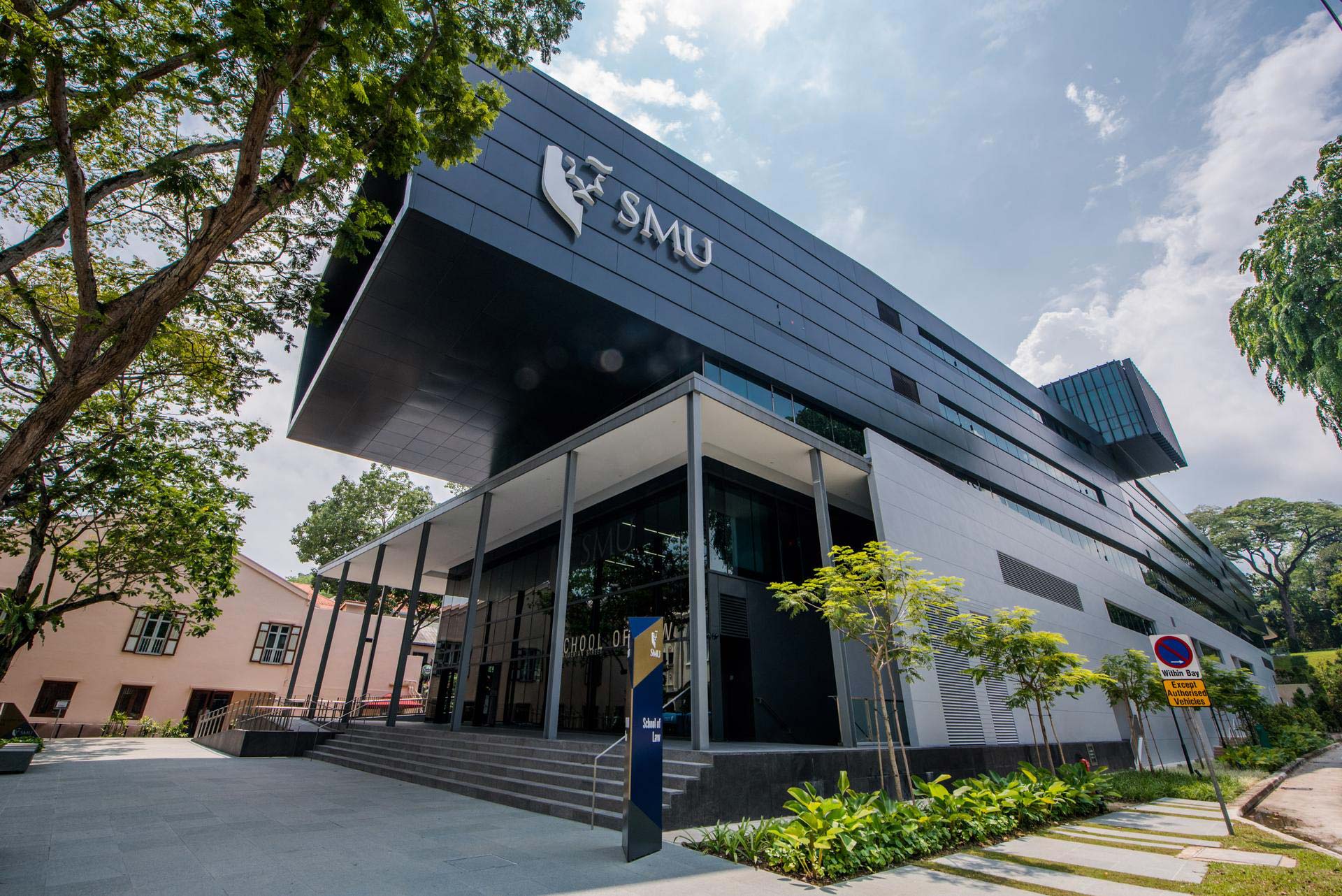
The pandemic has been a catalyst for disruption and change across industries and professions. The law sector, in particular, has undergone numerous shifts in recent times. Despite the impact of this unprecedented crisis, which changed the way we work overnight, legal education has maintained its perennial lustre: Demand has grown for lawyers in some practice areas like technology and intellectual property, fraud and investigations, project development and finance, and the dispute resolution practice — which saw some practitioners describing 2020 as the "busiest period in their career".
As Chief Justice Sundaresh Menon remarked during his Mass Call Address: 2021: "[...] we must imagine and develop a new and more efficient way of administering justice if we are going to avoid a justice gap of unmet legal needs. At the same time, the march of technology has opened up numerous possibilities as to how we may do so. Much has changed, and much more will surely change." As such, lawyers of tomorrow need to adapt to a landscape transformed by global events and digital advancement to thrive in a post-pandemic era.
Highly competitive and rigorous, the SMU Juris Doctor (JD) Law Degree provides a legal education that addresses the current challenges faced by the industry. It is a postgraduate programme offered by the SMU Yong Pung How School of Law designed to prepare candidates with prior university degrees in other disciplines or those who have studied law in civil law countries and other jurisdictions to practice the law in Singapore.
The JD programme bears the hallmarks of holistic learning, active seminar-style interactions, and international and practical exposure, synonymous with the SMU pedagogy. Our JD students will have ample opportunities to stay familiar with economics, finance, psychology, and technology, among others, and the development of law in other major economies of the world, such as the US and China. At the same time, our elaborately designed JD tracks enable students to sharpen their expertise in the most promising areas of legal practices from early on. The unique combination of holistic education with specialized skill training gives our graduates a leg up to achieve excellence in their professional careers. We believe that while the legal industry increasingly relies on experts with a deep understanding of the areas of their practices, real depth can only be built on breadth.
As JD candidates possess a variety of prior degrees and work experience and hail from diverse nationalities and cultures, they bring with them a unique vibrancy and gamut of perspectives to the classroom. This diversity of the cohort and a world-class, global faculty contribute to lively discussions and the development of graduates who can distinguish themselves in critical thinking, presentation, and making sound judgments.
A full-time three-year programme, the curriculum was formulated by legal academics and practitioners after extensive discussions and endorsed by the Singapore Institute of Legal Education and Ministry of Law. The Yong Pung How School of Law's participative learning environment helps develop confidence and analytical and presentation skills and cultivates leaders of the legal industry and beyond by building on students' experience and calibre.
Classes are deliberately kept small with a multi-faceted approach to course assessment, including class participation, term assignments and oral and written presentations. A distinctive feature of the JD programme is the opportunity for real-world exposure — students gain insights through participation by lawyers from practice, government and the judiciary in classroom teaching. This provides students with the opportunity to integrate practical expertise with theory and doctrine.
For those considering a career in the ever-evolving and complex legal landscape, here are some insider tips on ways to gain an edge during the SMU JD programme admissions process:
- Be an early bird applicant
Candidates may stand a higher chance if they apply early as JD admissions are conducted on a rolling basis. Applications for the intake will close once the class is filled. All remaining applicants will then be considered for the following year's intake. - Ensure all required documents are submitted
All documents (including reference letters) have to be submitted before being shortlisted for a written test. As confidential reference forms are submitted directly to the admissions office, candidates may request referees to inform them when the references have been sent in to plan for submitting application documents. - Ace the written test
The one-hour written test will be conducted once a minimum of 10 applicants has submitted all their supporting documents (including reference letters). The admission committee is looking for analytical ability, fluency, coherence in arguments and the ability to pick out key points. No prior legal knowledge is needed, and there is nothing to prepare. Just keep calm and write. - Share your perspectives during the interview
Only those who have passed the written test will be shortlisted for an interview. The interviews will be conducted once a minimum of 10 applicants has been shortlisted. The interview format generally involves two faculty members and one or two candidates. During the interview, remember to keep your cool and form an opinion — all without taking umbrage when others disagree with your point of view. - No "chope-ing"
Apply during the year you wish to enrol as there is no deferred admission for the JD programme.
Preparing For The Legal Profession Amid A Pandemic
The pandemic has been a catalyst for disruption and change across industries and professions. The law sector, in particular, has undergone numerous shifts in recent times. Despite the impact of this unprecedented crisis, which changed the way we work overnight, legal education has maintained its perennial lustre: Demand has grown for lawyers in some practice areas like technology and intellectual property, fraud and investigations, project development and finance, and the dispute resolution practice — which saw some practitioners describing 2020 as the "busiest period in their career".
11 November 2021
Two Key Bars Cited In Mid-Career Law Switch
Many mid-career individuals who joined the legal industry say law schools should structure their programmes to accommodate family and financial commitments of older graduate students. All three law schools here - NUS, SMU and SUSS have graduate programmes. SMU offers a Juris Doctor (JD) course, which can be done in two to three years. SMU Associate Dean (PG Curriculum and Teaching) and Associate Professor of Law Maartje de Visser shared that the JD programme at SMU has seen a growing number of mid-career applicants across the years. SMU alumnus Charles Li, Associate Director, Drew & Napier, who was an auditor before he obtained his JD at SMU, highlighted the challenge of restarting one’s career despite having work experience. However, after having worked as a lawyer for the past decade, he said, “I feel a greater sense of achievement in being able to…address both the legal and commercial problems that people face.”
20 January 2020
No Safer Place Than Singapore
In a commentary, J.D. alumna Dr Bertha Woon reflects on her experience working as a General Surgery Registrar at Tan Tock Seng Hospital’s Intensive Care Unit during the SARS period, and discussed how Singapore's healthcare system is now fully prepared after the 2003 SARS epidemic, to deal with the COVID-19 pandemic.
22 March 2020
Singaporean Lawyer Who Defended Pro Bono Convicted Helper Wins High Praise From Judge
We are proud of our JD alumnus, Anil Balchandani from our JD pioneer batch, who defended domestic helper, Parti Liyani, pro bono and won the case.
Praised by High Court judge Justice Chan Seng Onn that "his written submissions were detailed and well-footnoted; his arguments were persuasive.... he analysed the grounds of decision of the trial judge in great detail to submit on areas where the trial judge had erred in her findings; he handled all these matters singlehandedly and had shown much dedication in his pro-bono work for this case."
Other sources:
Supreme Court Judgement - https://www.supremecourt.gov.sg/docs/default-source/module-document/judgement/-2020-sghc-187-pdf.PDF?fbclid=IwAR2MHMtsLU0hudaHbvy47hBa9Bqgb3437ZtKJJd7L8UhT6zbD-xDk0aGFco
Interview with HOME (Humanitarian Organisation for Migration Economics)
5 September 2020
Edwin Tong: Simplifying Civil Legal Aid Process Helps To Avoid Labelling Of Applicants
Speaking at the SMU Pro Bono Centre's (PBC) annual appreciation dinner on Wednesday, Senior Minister of State, Ministry of Law & Ministry of Health, Edwin Tong said that the Government has been working with partners including SMU PBC to make legal aid available to those who are unable to afford basic legal services. For their pro bono contributions, SMU PBC gave out awards and certificates of appreciation to lawyers and students, including Richard Tan Ming Kirk, who has served more than five years as a volunteer lawyer at the Centre’s legal clinic. Fourteen Juris Doctor graduates and 30 LLB graduates from the SMU Class of 2019 were also recognised for contributing more than 50 and 80 pro bono hours respectively. SMU PBC started the free legal clinic in 2013. Last year, the clinic saw 287 applicants for issues including family issues, employment issues, criminal matters and tenancy issues.
21 November 2019
工程师将圆律师梦
Continuing from last week's feature on SMU's School of Law Pro Bono Centre Appreciation Dinner, Chinese daily Lianhe Zaobao also featured this story that of our alumni Wei Chieh Tan's journey into the legal profession.
After graduating with a Bachelor’s Degree in engineering, Wei Chieh joined the Ministry of Defence (Mindef) as a staff officer, where he obtained three postgraduate degrees in engineering. However, as he has always had an interest in law, he left his "iron rice bowl" job three years ago, to enrol in SMU's Juris Doctor programme, which he graduated from in 2019.
29 November 2019