

REGISTER INTEREST IN SMU JD PROGRAMME
You may register your interest in the SMU JD programme to receive updates on programme information and upcoming admission events.
| DATES | EVENT | DETAILS |
|---|---|---|
| Upon Registration | SMU JD Programme 1-On-1 Consultation Welcome to SMU JD programme 1-On-1 Consultation. Register now and you will have 20 mins to talk with our recruitment manager. It will allow us to pre-access your eligibility and reply to your questions about programme and application. Time: TBC (Singapore Time Zone) Venue: Zoom meeting ( confirmation email with zoom link will be sent to registered email address once the registration is confirmed ) Notes:
| Coming Soon
|
We are looking for outstanding candidates who meet our admissions criteria of either a cum laude or a 2nd class upper. However, candidates with significant achievement such as having an outstanding further degree and/or outstanding work experience that could contribute to the class and legal profession will be reviewed closely by the Admissions Committee.
A graduate of the SMU J.D. programme will be able to practise in Singapore after completing the requirements of practical training and exam for the Singapore bar. Admission to other bars (legal professions) depends on the requirements of each jurisdiction, just as with the LL.B. degree.
One would have to look at the particular bar entry requirements for a particular country or state. In Canada and the U.S. , admission to the bar is governed by each province or state. Since Canada and the U.S. are J.D. jurisdictions, a J.D. degree may be treated more favorably than an LL.B. degree but there may still be some additional course requirements (such as taking a local property law or constitutional law course). The local bar websites of each jurisdiction will provide specific details.
Graduates of SMU Yong Pung How School of Law must pass Part B of the Bar Examinations before they are entitled to serve their Practice Training Period (see Rule 3(1) of the Legal Profession (Practice Training Period) Rules 2009).
If however you graduated from NUS or SMU in December instead of June and wish to complete your Practice Training Period before the start of the Part B course instead, you can try seeking an exemption from the Minister for Law.
Please note that each appeal for an exemption will be considered on its individual merits and may be granted subject to conditions. The onus is on the applicant to make a strong case for the exemption sought with relevant supporting documents.
Apart from electives, classes will usually not be held with the undergraduates.
Generally, exemptions will not be granted. However, an SMU graduate who has completed an SMU Law module with a prefix "LAW" in his or her undergraduate SMU degree studies (completed with at least a B grade) may be exempted from the course, subject to approval of the School.
Acceleration of the programme is subject to the School's advice and approval. Students will also need to consider his or her ability to manage an increased load every term, including the vacation period. Students must also be mindful of the overall GPA at the end of each term, as a minimum of 3.00 is needed to qualify for practice.
Please submit a letter from your current supervisor to confirm your English language ability along with your application.
Yes, there are. Scholarships are available to students who have been offered a place in the programme. For more information, please refer to Scholarships & Awards.
You may want to consider taking an education loan from any of the local banks. There are many local education loans available. Please go to their websites for details.
We only have 1 intake a year, which is in August. It is a full-time programme.
None of SMU's postgraduate programmes enjoy tuition grant from the government.
CPF cannot be used for graduate courses.
At the moment we are not scheduling a part-time or evening programme. If that occurs, we will make a public announcement.
Graduate Programmes Office (J.D.)
Singapore Management University
Yong Pung How School of Law
55 Armenian Street
Singapore 179943
FOR ENQUIRIES, PLEASE CONTACT:
Mr Gong Jinhao
Postgraduate Marketing and Admissions Manager
Email: jd@smu.edu.sg
The Singapore Management University (SMU) reserves the right to amend the discount schemes for new incoming cohorts when required.
Please note that discounts will not be awarded in conjunction with other ongoing discount schemes, discount and scholarship are not stackable. Should a student qualify for more than one discount, only the higher discount amount will be applicable. All exemption decisions by SMU are final and not subject to appeals.
S$8,000 discount off total tuition fees (from 2025 intake onwards)
S$5,000 discount off total tuition fees (from 2025 intake onwards)
From 2025 intake onwards, a S$3,000 discount off total tuition fees is granted to students from ASEAN nations.
SkillsFuture funding for Singapore Citizens, click here for more details.
Singapore Citizens aged 40 years and above can claim SkillsFuture Credit (Base Tier) and $4,000 SkillsFuture Credit (Mid-career Tier). This credit is intended to offset out-of-pocket tuition fees, starting from Academic Year 2024/25 intake, commencing on or after 1 May 2024.
SkillsFuture Mid-Career Enhanced Subsidy (up to 90% of course fees) is not applied to the SMU JD programme.
Limited scholarships are available for outstanding applicants to the programme.
With effect from the 2020 admission intake, the J.D. Scholarship will be revised as follows:
| First Tier: $10,000 | Second Tier: $5,000 |
The scholarship amount shall be used to offset the programme fees across the four academic terms.
Eligibility
| ✅ | Offered a place in the J.D. Programme |
| ✅ | A minimum of second class upper honors/Cum Laude degree qualification or a GPA equivalent |
| ✅ | Excellent application interview and essay scores |
| ✅ | Good letters of reference |
| ✅ | Preference will be given to students who demonstrate financial need |
A complete description of the applicant’s financial status, including current savings, stocks, last monthly income as well as any outstanding debts will be required of an applicant for financial aid together with the completed scholarship application form
The documents are to be emailed to the Programme Manager.
Terms and Conditions
The continued tenure or renewal of the Scholarship each term is subject to the scholar:
- demonstrating good conduct and compliance with the University's prevailing code of conduct and other rules and regulations applicable to the scholar; and
- fulfilling the terms and conditions set out herein and/or such other terms and conditions as may be advised by the University in writing from time to time.
The Scholarship may be withdrawn at any time in the following circumstances:
- where the scholar has failed to abide by any code of conduct, rule or regulation for the time being enforced at the University, or the scholar has conducted himself in such manner or participated in any activity which would in any way jeopardize or discredit the University’s standing or reputation;
For the avoidance of doubt, the scholar shall not have any right or claim against the University in the event that the Scholarship is terminated or withdrawn.
The J.D. Financial Aid is given to J.D. students who face a sudden change in financial circumstances (e.g. bankruptcy in the immediate family) while studying in the programme. Up to $10,000 payable in 4 equal instalments will be used to offset the student’s term course fee across the academic terms.
Eligibility
| ✅ | Matriculated in the J.D. Programme |
| ✅ | Minimum CGPA of 3.4 in the J.D. programme |
| ✅ | Evidence of financial need (e.g. bankruptcy documents; death certificate,etc) |
Relevant documents together with the completed scholarship application form needs to be submitted to the J.D. programme manager.
( For J.D. students who have completed at least one year of SMU J.D. studies)
Funded by the Kwa Geok Choo Law Library Endowment Fund, the Kwa Geok Choo Scholarship is available to outstanding law undergraduates and postgraduates (J.D.) of the Singapore Management University. Up to 4 postgraduate scholarships will be awarded each year. Each scholarship is tenable for one year of the scholars' studies, subject to outstanding academic performance and continued observance of the eligibility criteria.
Eligibility
| ✅ | Present full-time SMU Juris Doctor student of any nationality who has completed at least one year of full-time SMU J.D. studies |
| ✅ | Outstanding academic results (minimum cumulative GPA of 3.7) |
| ✅ | Outstanding leadership qualities |
| ✅ | Embraces and demonstrates the SMU CIRCLE (Commitment-Integrity-Responsibility-Collegiality-Leadership-Excellence) Values |
| ✅ | Active involvement in co-curricular activities; and |
| ✅ | Demonstrates a spirit of volunteerism by contributing to the community |
Tenure & Benefits of the Local Postgraduate Scholarship Award
- The scholarship has a value of $30,000.
- The scholarship will offer financial support towards the Scholar's tuition fees, living allowances and the purchase of textbooks.
- No bond is required under the terms of this Scholarship
Students who meet the CGPA criteria will be sent the application form for the scholarship.
The course awards made available by the generosity of our partners and community at large can be found here. Please key in "Juris Doctor" in the search bar to see the awards that JD students are eligible for.
The Wee Chong Jin Top J.D. Award will be given to the top graduate of the Doctor of Jurisprudence Programme at the Yong Pung How School of Law each year.
Each Award shall have a value of S$6,000.
One Award will be given each year from academic year 2012/13 and in perpetuity.
The Award will be given out annually at the SMU Convocation Ceremony or at an appropriate University event.
Set up in 1991, the Lee Kuan Yew (LKY) Scholarship is the premier postgraduate scholarship in Singapore. It marks Singapore's continuous effort to recognise outstanding individuals with the aptitude and inclination to contribute to Singapore and our society.
Applicants, who must be Singapore citizens, will be assessed holistically. This includes their track record of leadership and achievement in their fields of pursuit/professions. Applicants should also have the potential to excel in their fields/professions, which will contribute to and benefit Singapore and our society.
Since its inception, many Lee Kuan Yew Scholarship holders have gone on to make significant contributions across varied fields including the Public Service, business, law, medicine, the arts and academia.
More details and application process can be found here.
Student Pass
International students must possess a valid Student's Pass to be able to study at SMU. SMU will assist in the application of student passes once the offer to the programme is accepted. Under the Immigration Checkpoint and Authorities (ICA) regulation, only international students studying in a full-time programme are allowed to have student passes.
Upon completion of the programme, students will have to give up their student passes. Extension of the student pass is not allowed once a student has completed graduation requirements.
Please note that the University does not sponsor the student's dependents (e.g. spouse, children, parents) for any immigration passes.
More details about Student Pass in Singapore, please visit Singapore Immigration and Checkpoints Authority here.
Student Accommodation
Student Hostels
Students who require accommodation will be pleased to note that SMU students enjoy preferential rates at various privately-managed student hostels.
For more information, please click here.
Private Apartments
If you prefer private apartments, you can engage the services of a property agent to help you find an apartment. There will be an agent's fee for this.
Points to Consider When Choosing Accommodation:
| ✅ | Rent | This includes the rental amount of the unit, rental deposit, security deposit, administrative charges, agent fees for service rendered, etc. |
| ✅ | Location | Do check whether the apartment/hostel is conveniently located and if public transport, grocery stores, food outlets or banks are easily accessible. |
| ✅ | Length of Lease | The lease of a unit is normally for at least a year. Landlords of private apartments usually ask for up to 3 months' rent as deposit. However, short-term lease is available but usually at a higher rental. |
| ✅ | Others | The cost of accommodation depends on several factors such as the locality, type of premises, size, furnishings provided, recreational facilities available, length of lease. Housing in Singapore is generally expensive, especially within the city. |
Do note that the contract / tenancy agreement will be solely between the student and hostel management / owner. Please read the contract / tenancy agreement carefully before you make any commitment.
Cost of Living
The living costs you incur will depend on your lifestyle. An international student may expect to incur the following per month:
| Accommodation | Meals | Transportation | Miscellaneous |
| S$400 – S$2,000 | S$300 – S$500 | S$150 – S$300 | S$500 – S$1,500 |
International Student Experience
The Office of Global Learning annually plans a series of social and recreational programmes to engage our international students. These activities provide opportunities for integration with the university community and are aimed at enhancing the student experience. For more details, please click here.
Application Fee (non-refundable)
With effect from the 2018 admission intake, the application fee is $100 (Inclusive of GST*).
Advance Tuition and Registration Fee* (non-refundable)
| Singaporean / Singapore Permanent Resident | Others |
|---|---|
| S$5,400 (Inclusive of GST*) | S$5,500 (Inclusive of GST*) |
Amount payable upon acceptance to the programme:
- $5,000 (Advance Tuition Fee) will contribute to the first payment of tuition fees.
- The remaining S$400 (for Singaporeans / PR) or $500 (for foreigners / non-PR) of the registration fee will cover the matriculation and examination fees, orientation activities, library and computer account.
Tuition Fees
For 2026 intake, the tuition fee of the entire programme will be $81,750 (inclusive of GST*).
The fee is billed in four (4) instalments over the first 2-year period. Students will have to make payment of their first billing of their tuition fee before the first term starts in mid-August. The remaining 3 billings will be paid before the enrolment of each new academic term.
| Tuition Fee Billing | Payment to be made by |
|---|---|
| 1st Billing ($15,437.50 Inclusive of GST) | Mid-August of Year 1 (before term starts) |
| 2nd Billing ($20,437.50 Inclusive of GST) | End October of Year 1 |
| 3rd Billing ($20,437.50 Inclusive of GST) | Early June of Year 2 |
| 4th Billing ($20,437.50 Inclusive of GST) | End October of Year 2 |
Do note that the first two (2) instalments are extremely close to each other and make your financial arrangements accordingly.
For scholarships and other financial assistance, please check here.
*Goods and Services Tax (GST) is a tax collected on behalf of the Singapore Government and will be charged at the prevailing rate.
*Payment should be made online via the student self service portal. The check is no longer accepted at SMU.
SMU Alumni Discount
With effect from the 2025 admission intake, SMU undergraduate and postgraduate alumni who are offered a place in the J.D. programme will automatically be granted a $8,000 discount on the JD tuition fee. The discount will be decuted evenly over the 4 instalments.
SMU exchange and non-graduating students are not eligible for the alumni discount and SMU reserves the right to amend the discount schemes for new incoming cohorts when required.
SMU Alumni Course Exemption Discount
With effect from 2025, another $3,000 discount above the $8,000 SMU alumni discount may be granted to the alumni if one (1) credit unit (CU) law module is approved for transfer, up to 4 CUs.
SUTD Alumni Discount (PDPP)
With effect from the 2019 admission intake, SUTD alumni who are offered a place in the J.D. programme will be granted a 10% discount under the Pre Experience Postgraduate Degree Experience Programme Agreement (PPDP). The 10% discount will be spread equally over the 4 payment instalments. The discount is only applicable to SUTD alumni when they apply within 5 years from the time they graduate from SUTD. SUTD exchange and non-graduating students are not eligible for the PPDP discount.
The application for 2026 intake is open.
For New Applicant
You need to first register for an account with SMU before you can submit an online application form.
For Existing Applicant
If you have already created an account with SMU, please go directly to the Login page to continue with your application.
KEY DATES (FOR 2026 INTAKE)
Please refer below to the key dates for the application stages:
| Application Stages (Pre-Acceptance) | Time |
|---|---|
| Online Application Open | 26 September 2025 |
| Online Application Deadline | 1 May 2026 |
| Written Test and Interview (Rolling Basis) | December 2025 onwards |
| Application Stages (After Acceptance) | |
|---|---|
| Online Matriculation | June 2026 |
| Verification of Documents, application for J.D. scholarship, compulsory orientation | July to August 2026 |
| Term Commences | 17 August 2026 |
APPLICATION PROCESS
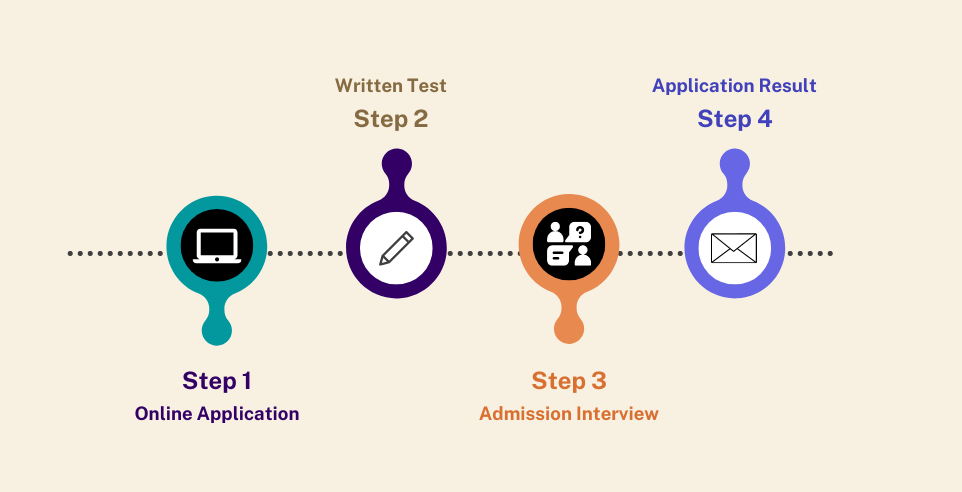
STEP 1: ONLINE APPLICATION
The online application will be on a rolling basis. Once the cohort size is filled, applications for the intake will close. All other applicants will then be considered for the following year's intake. SMU JD has only one admission in August per year.
It's recommended to use a computer to access the online application system. A step-by-step guide for the JD online application is available here.
Those completing their first degree by early July of the year of admission may apply using their latest official transcript. Applicants will be asked to submit final transcript and graduate certificate letter/degree scroll later if they are offered a place in the programme.
An official translation would need to be uploaded for all documents which are not in English. Translation should be certified by the issuing institution or a Notary Public/Commissioner of Oath. Hard copies of required documents are not required at the application stage.
Any enquiries about the online application, please email at jd@smu.edu.sg. For IT issues, please contact SMU IT Help Centre directly at helpdesk@smu.edu.sg.
The following documents will be required to accompany the online application:
Applications with incomplete document submissions will be disqualified from consideration.
Download JD application document checklist here.
Identification document
| Two Referees Two different referees are required. Please indicate the details of two referees in the online application form, including name, designation and email. The referee will receive a recommendation email from SMU once the JD application is submitted. It may take around 15-20mins to complete the online recommendation form. Where possible, at least one of the recommendations should be from someone who has taught the applicant or supervised applicant's work in university studies. If applicant has left school for a long time and are unable to submit academic references, please provide 2 referees from people who are familiar with applicant's performance, such as employers/colleagues/clients etc. The contents of the recommendation are confidential. Under no circumstance should the applicant be able to see the contents of the recommendation. If referee couldn't receive SMU recommendation email, please ask referee to check spam folders or contact JD programme office at jd@smu.edu.sg directly. |
Degree Certificate The copy of the degree certificate(s) certified by the issuing institution or a Notary Public/Commissioner of Oath. And the bachelor's degree certificate is compulsory. Combine all degree certificates into one PDF file. | CV A concise resume that provides chronological information about your educational background, work experiences and accomplishments. Up to two (2) A4 pages. |
Transcript The copy of the official transcript certified by the issuing institution or a Notary Public/Commissioner of Oath. And the undergraduate transcript is compulsory. Combine all transcripts in one PDF file. | Statement of Purpose All applicants are required to submit a detailed personal statement based on the questions in the online application form. Maximum 600 words to each answer. |
IELTS/TOEFL English proficiency test results (TOEFL or IELTS) for all international applicants whose bachelor's degree was not conducted in English. Scores that are more than 2 years old will not be accepted. For more details, please refer to the 'Admission Criteria'. GRE/GMAT or SMU Admission Test is not required. LSAT or LNAT is optional. | Application Fee Payment for the application fee must be made through the online application system. Applications submitted without payment will be considered incomplete and invalid. Please note that checks are no longer accepted by SMU. DO NOT pay the 'Optional Fee: 1st Attempt for SMU Admission Test (S$125)', which is not required to the JD programme. All fees paid at the application and matriculation stages are non-refundable under any circumstances. |
Other Supporting Documents If any additional significant supporting documents, please send them to jd@smu.edu.sg with the applicant’s full name and application reference number by the application deadline. Kindly combine all documents into a single PDF file, with a maximum length of six A4 pages. No additional supporting documents will be accepted after the application deadline. | |
STEP 2: WRITTEN TEST (Online)
- Shortlisted applicants must attend a J.D. written test (1 hour) after completion of online application, verification of supporting documents and payment of application fee.
- The JD programme office will contact shortlisted applicants via email to register for the written test.
- The written test will be conducted via a Zoom meeting. Once the written test registration is confirmed, applicants will receive confirmation email with zoom link. Reminder emails are available near the test date.
- The written test is similar as reading comprehension, several short essay questions following a long reading material. No legal knowledge is required for the written test. No sample paper for reference. The test is open book, applicants have access to online rescources apart from AI tools.
- No additional fee charged for the written test.
STEP 3: ADMISSION INTERVIEW (ONLINE)
- After written test, shortlisted candidates will be invited for an admission interview conducted by two (2) law faculties.
- The interview will be conducted via Zoom meeting. The JD programme office will contact shortlisted candidates via email to register for interview. Once the registration is confirmed, candidates will receive a confirmation email with azoom link. Reminder emails are available near the interview date.
- After the interview, JD programme office will generally update application outcome via email within 2 weeks.
1. Entry Requirements
Non-law and law graduates are welcome to apply for the SMU JD programme if meet the admission criteria as follows:
- Completed an undergraduate education in any discipline with at least a Cum Laude or Second Class Upper Honours degree; or
- Law graduates from a civil law country or a non-gazetted common law university* with at least a Cum Laude or Second Class Upper Honours degree.
*The list of gazetted universities recognized by the Singapore Institute of Legal Education (SILE) can be found here.
- Graduating students who will obtain their bachelor's degree by early July of the admission year are welcome to apply using provisional transcript.
- Candidates who do not meet the above academic criteria but intend to sit for the Bar Exam and practice law in Singapore may consider the SMU Master of Laws (LLM) programme first, they may subsquently be granted direct entry to SMU JD subject to the transferring requirements.
2. English Proficiency
Applicants must show proficiency in the English language. A TOEFL / IELTS test is required if the applicant’s undergraduate degree was not conducted in English.
The minimum requirements:
- TOEFL (Paper-based or Internet-based Test): 100
- IELTS (Academic): Overall band of 7.5
From 21 January 2026, TOEFL introduces a new score scale from 1 to 6 in increments of 0.5. The minimum TOEFL score under the new scale as below.
- TOEFL (Paper Based Test or Internet Based Test): Overall Band of 5
- Apart from above tests, others such as TOEFL Institutional Testing Program (ITP), TOEFL MyBest Scores and Duolingo English Test are not accepted.
- Scores that are more than 2 years will not be accepted. More information can be obtained from the TOEFL website, IELTS website respectively.
- GRE, GMAT or SMU Admission Test (SMUAT) is not required to the SMU JD application. The LSAT/LNAT is not compulsory to SMU JD.
The JD/MBA will be considered as an advance placement/pathway should students wish to consider taking the other school’s program while studying for their JD or MBA.
Admissions will be conducted separately by JD and MBA programs. Students must meet admissions requirement of each school.
Concessions MBA program will give JD students opting to do MBA:
- S$5,000 SMU Alumni discount on MBA tuition
- Internship exemption
- 3 MBA electives exemption and $2K for each exempted elective
The advance placement for SMU MBA will begin with effect from Jan 2021.
Details on the SMU MBA can be found at https://business.smu.edu.sg/mba?utm_source=PGPP&utm_medium=Referral&_ga=2.246841286.397851784.1610506714-1461238237.1610506714
Please feel free to contact our SMU MBA colleagues at mba@smu.edu.sg
In September 2013, SMU Yong Pung How School of Law and Korea’s Yonsei University Law School (YLS) signed a Memorandum of Agreement to establish a dual degree programme leading to a Juris Doctor (J.D.) degree conferred by SMU and a Juris Doctor (J.D.) degree conferred by YLS.
J.D. students from SMU and YLS who spend 2 academic years at each institution and complete 19 cus of core modules in SMU and 60 credits in YLS will obtain J.D. degrees from each institution.
Students will need to satisfy any additional requirements for each degree as mandated by each university. This includes internships and community service.
The total number of students admitted in any given year will be no more than two (2) from each school.
Getting Required Scores
- Complete at least 2 AYs in SMU and all SMU core modules (19 cus)
- Obtain a minimum CGPA of 2.5
- Complete YLS application
- (1) Korean LEET(Legal Education Eligibility Test) score
- (2) TOPIK Level 6
- (3) TOEFL scores 86 or above in IBT
The Korean LEET is an official test required for all Korean Professional Law Schools that is administered in Korean once a year usually in late summer. A Korean LEET score is valid only for the following year’s Professional Law School admissions. Fluency in Korean is essential. For more information on the LEET, please refer to http://www.leet.or.kr/.
Please understand that submission of proof of English proficiency is mandatory in our online application system, regardless of nationality and where a student received their university education. TOEFL scores should be taken within 2 years before the deadline of application period.
Documents Submission
The necessary supporting documents that must be submitted stipulated in the admission guide that can be downloaded at https://lawschool.yonsei.ac.kr:44931/entrance/ent01_1.php.
Interview
Qualified applicants must then complete an in-person interview at YLS on a designated date, usually in November. There is no separate written assessment.
Letter of Acceptance
YLS will make a decision regarding final acceptance after discussion with SMU. Letter of acceptance and Information for accepted students will be sent to the selected SMU student.
Requirements for Graduation from YLS J.D. program for SMU students
For SMU’s dual degree students, who have already completed 19 course units at SMU, YLS will recognize this as 30 credits from elective courses at YLS. SMU dual degree students will therefore have to complete 35 credits from mandatory courses and only 25 credits from elective courses at YLS.
Please refer to the YLS course structure as below.
1. Mandatorty Courses (35 credits)
| The Required Basic Courses (29 credits) | Required Professional Courses (6 credits) | ||||||||||||||||||||||||||||||||
|
|
2. Elective Courses (25 or more credits out of the following courses)
- Foundational Courses: 18 credits or more
- Advanced Courses: 12 credits or more
- Applied Practical Courses: 5 credits or more
- International and Comparative Law: 3 credits or more
- Basic Legal Studies and Interdisciplinary Fields: 3 credits or more
Students pursuing J.D. degree also have to pass Graduation Qualification Test before graduation.
The participating students will receive a J.D. degree scroll upon fulfillment of the graduation requirements.
Requirements for Eligibility to the Korean Bar
To sit for the Korean Bar examination, students must fulfill the following requirements:
- Satisfy the graduation requirements mentioned above and received a J.D. degreefrom a Korean Professional Law School
- Pass the Korean Professional Responsibility Examination that is usually held before the Graduation Qualification Test
Candidates will have to complete a 6-month training contract in Korea after passing the Korean Bar examination.
Fees
SMU students have to pay a non-refundable application fee of 250,000 KRW.
When enrolled at YLS, students must pay the full tuition fee, similar to Korean regular students. The tuition fee is presently is 13,309,000 KRW for the first semester and 10,238,000 KRW for the remaining semesters as of academic year 2013 but is subject to annual adjustments.
A recommendation from the SMU J.D. programme director and approval from YLS are required in order to be considered for this dual-degree programme.
Do note that some modules in YLS are conducted in English but most are conducted in Korean. A candidate must therefore be fluent in Korean language in order to do the dual degree programme
The application window for the SMU Juris Doctor (J.D.) programme for AY2016-17 is now open.
Application details can be found at /jd/apply
For more details, please contact jd@smu.edu.sg
Getting Required Scores
- Complete at least 2 AYs in YLS and 60 credits
- Obtain the minimum CGPA as set by YLS
- Complete SMU application
- Meet SMU’s TOEFL/IELTS English Proficiceny Test Requirement and other means of evaluation
A recommendation from the YLS J.D. programme director and approval from SMU are required in order to be considered for this dual-degree programme.
Do note that all modules in SMU are conducted in English. A candidate must be fluent in English in order to do the dual degree programme.
Documents Submission
YLS students can apply online for the SMU J.D. programme by clicking here. This link also informs interested candidates of the required supporting documents and key dates.
Interview and Admission Test
Shortlisted candidates will have to go through an interview (which can be done through Skype) and a written assessment which will be graded by the admission committee.
Letter of Acceptance
SMU will make a decision regarding final acceptance after discussion with YLS. Letter of acceptance and information for students will be sent to the selected YLS student.
Requirements for Graduation from SMU J.D. programme for YLS students
YLS dual-degree students will have to do 19cus in SMU and obtain a minimum of CGPA 2.5 in order to graduate.
| Course | Credit Unit |
| Contract Law 1 | 1 |
| Criminal Law | 1.5 |
| Legal Research Writing | 1 |
| Legal System, Legal Method & Analysis | 1 |
| Contract Law 2 | 1 |
| Law of Torts | 1.5 |
| Law of Business Organization | 1 |
| Comparative Legal Systems | 1 |
| Ethics & Social Responsibility | 1 |
| Corporate Law | 1 |
| Law of Property | 1.5 |
| Commercial Conflict of Laws | 1 |
| Constitutional & Admin Law | 1.5 |
| Law of Equity & Trusts | 1.5 |
| Law of Evidence & Civil Procedure | 1 |
| Legal Theory & Philosophy | 1 |
They will be exempted from the remaining 6 SMU elective modules based on the 60 credits that they have completed in YLS. This would mean that their SMU transcript would indicate with a grade for every module done in SMU and the 6 exemptions without any grades. Participating students will be awarded with a degree scroll from SMU and another from YLS upon graduation.
Requirements for Eligibility to the Singapore Bar
In order to be eligible to be called to the Singapore Bar to practice law in Singapore, J.D. students must graduate with a Cummulative GPA of 3 in their law modules and fulfill all graduation requirements. YLS Dual-Degree Programme students must complete the core modules of the SMU JD programme upon graduation should they wish to sit for the Singapore Bar.
Interested students will have to attend the 5-month National preparatory course for the Bar Exam (called Part B) organized by the Singapore Institute of Legal Education and do a 6-month training contract (i.e. pupilage) before they are called to the Singapore Bar.
Fees & Expenses
Do note that for YLS participating students applying for the programme would need to pay a non-refundable application fee of S$50.
Registration Fee* (non-refundable): S$5,500
*This amount is payable upon acceptance to the programme; S$5,000 will contribute to the first payment of tuition fees. The registration fee of S$$500 includes the cost of matriculation, examination fees, orientation activities, library & computer account. The remaining $5,000 will contribute to the payment of the first instalment of the tuition fee.
The current tuition fee for 19cus as at 2015 is SGD52,714 payable in 4 instalments. Please note that fees are subject to annual adjustments.
Participating students shall pay the host institution all tuition fees for all credit hours and be responsible for covering the cost of their own:
- International travel
- Travel in the host country
- Accommodation
- Books, equipment, consumables, incidental expenses
- Hospitalization and health insurance
Visa and Accommodation
SMU will assist in arranging for a student pass for successful applicants. More details on the student pass can be found here.
Participating students shall be responsible for arranging their own accommodation.
For more details on renting a room in a private or HDB(public housing) apartment, please click here. A list of private hostels can also be found here.
We would like to thank you for your interest in the programme.