

The online application for the August 2026 intake is closed.
Key Application Date For 2026 Intake
| Intake | Application Opening Date | Application Closing Date |
|---|---|---|
| Academic Year 2026 (Only one intake in August per year) | 1 August 2025 | 31 January 2026 |
| Admission Interview / Application Result | ||
| Admission interview will be scheduled after the application deadline, only shortlisted applicants will be invited via email. Applicants will receive their applicaiton outcome through email. | ||
Application Process
An application is considered complete when
- Online application is submitted before the closing date
- All reqruied supporting documents are received before the closing date
- Application fee is paid before the closing date
Failure to complete the above will render the application invalid.
STEP 1: Online Application
- It's recommended to use the web browser to complete the online application.
- If encounter any question in the online application system, please contact the programme office at lawphd@smu.edu.sg along with full screenshots and error messages.
For New User | For Existing User |
Register an account with SMU before you can submit an online application form. | Already created an account with SMU, please go directly to the Login page. |
Supporting Documents List
- Please go through requirements below and label documents accordingly. Only documents with right format can be reviewed.
- Documents that are not in English must be translated and certified by the issuing institution or a Notary Public/Commissioner of Oath.
- Hard copies are not required at the applicaiton stage, which will be verified if applicants are selected after the admission interview.
- All requried supporting documents below must be uploaded in the online application form.
Identification Document
| Two Referees Two referees are required. Please indicate the details of two referees in the online application form, including name, designation and valid email address. Once the PhD application is submitted, the referee will be automatically notified through email to complete an online evaluation. It may take 15-20mins completing the online recommendation. Referees must complete the online recommendation before the application closing date. Where possible, at least one of the referees should be someone who has taught the applicant or supervised applicant's work during university studies. If applicant has left school for a long time and is unable to submit academic recommendation, please nominate other referees who are familiar with your academic or work performance, such as employers/colleagues/clients etc. The contents of the recommendation are confidential. Under no circumstance should the applicant be able to see the contents of the recommendation. If referee couldn't receive SMU recommendation email, please suggest referees to check spam folders or contact programme office at lawphd@smu.edu.sg directly. |
Degree Certificate The copy of the degree certificate(s) vertified by the issuing institution or a Notary Public/Commissioner of Oath. Only bachelar's degree and above are accepted. Combine all degree certificates into a single PDF file. | CV A concise resume that provides chronological information about your educational background, work experiences and accomplishments. Up to two A4 pages. |
Transcript The copy of the official transcript certified by the issuing institution or a Notary Public/Commissioner of Oath. Only undergradute-level and above transcripts are accepted. Combine all official transcripts into one PDF file. | Writing Sample All applicants are required to submit 1 writing sample (such as a published/unpublished paper, research article, project report or undergraduate report etc). The sample must be composed by the applicant independently. Group wrok is not accepted even if the majoriry of the work was completed by the applicant individually. The writing sample must be submitted in PDF format and can not exceed 10 pages (A4) excluding the cover page if included. |
Statement of Purpose Apart from the personal statement section in the online application form, all applicants are required to submit an additional statement of purpose, which can be up to maximum 2,000 words. The statement should address the following questions at least:
Please send the statement of purpose to lawphd@smu.edu.sg once the online application is submitted, including applicaiton reference number and full name. | Test Results English Proficiency Test Results (TOEFL or IELTS) are required if the medium of instruction during undergraduate education was not English. GRE is required if applicable. Detailed requirements can be found here. |
Proof of Payment Payment for the application fee (SGD 15) must be done via debit/credit card in the online application system. All fees paid at the application stage is non-refundable. Please save the payment confirmation or receipt for your own reference. | Other supporting documents No more than 6 pages (A4) in one PDF file. |
STEP 2: Admission Interview
The application for SMU YPHSL PhD programme is not on a rolling basis. Once the application is closed, the PhD admission committee will access all recevied applications and supporting documents.
Shortlisted applicants will be invited to the admission interview via email. Please check the inbox and spam folders regularly after the application closing date.
The schedule of admission interview will be updated through email after application deadline. The admission interview will be conducted online via Zoom.
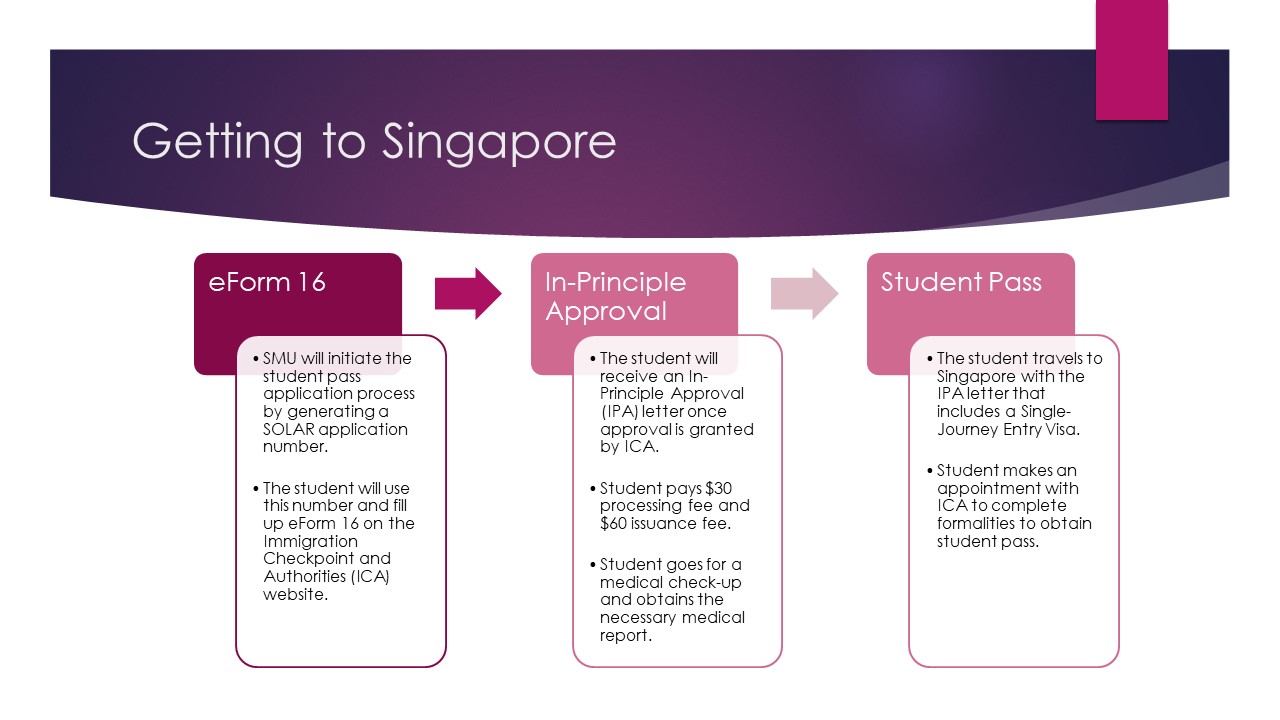
International students must possess a valid Student's Pass to be able to study at SMU. SMU will assist in the application of student passes once the offer to the programme is accepted. Under the Immigration Checkpoint and Authorities (ICA) regulations, only international students studying in a full-time programme are allowed to have student passes.
Application for Student's Pass is done online at the ICA website. You must receive a SOLAR application number from SMU before you can submit your application online. Your programme manager will usually initiate the application process in late May/early June. You will be provided with further details after the programme manager has registered you in SOLAR.
Student's Pass applications submitted electronically are generally processed in 5 working days for foreigners who do not require a visa to enter Singapore. For foreigners who require a visa to enter Singapore, the general processing time is 10 working days. Some applications may take a longer time to process.
For students who require visas to enter Singapore, the Student's Pass In-Principle Approval (IPA) letter will include a Single-Journey Entry Visa for your stay in Singapore till you have completed all formalities upon your arrival in Singapore. We will send the IPA letter via email once your Student's Pass application is approved. You can use the letter as a visa to enter Singapore. You are not required to apply for a separate visa.
If you wish to visit Singapore for personal reasons, please refer to the ICA website for a list of countries whose nationals require visas to enter Singapore.
Upon completion of the programme, students will have to give up their student passes. Extension of the student pass is not allowed once a student has completed graduation requirements.
Please note that the University does not sponsor the student's dependents (e.g. spouse, children, parents) for any immigration passes.
Private Apartments
You can engage the services of a property agent to help you find an apartment. There will be an agent's fee for this service.
Points to Consider When Choosing Accommodation:
- Rent - This includes the rental amount of the unit, rental deposit, security deposit, administrative charges, agent fees for service rendered, etc.
- Location - Do check whether the apartment/hostel is conveniently located and if public transport, grocery stores, food outlets or banks are easily accessible.
- Length of Lease - The lease of a unit is normally for at least a year. Landlords of private apartments usually ask for up to 3 months' rent as deposit. However, short term lease is available but usually at a higher rental.
- Others - The cost of accommodation depends on several factors such as the locality, type of premises, size, furnishings provided, recreational facilities available, length of lease. Housing in Singapore is generally expensive, especially within the city.
Do note that the contract / tenancy agreement will be made solely between the student and hostel management / owner. Please read the contract / tenancy agreement carefully before you make any commitment.
Singapore has one of the highest cost of living in South East Asia. Below are estimates of how much is required during your stay in Singapore. They do not include tuition fees and travel expenses from your home country to Singapore.
An international student in Singapore spends, on average, about S$1,000 to S$3,000 a month on living expenses. This amount will, of course, vary depending on your lifestyle and course of study.
This table gives a rough estimate of basic monthly expenditure for an international student in Singapore:
| Item | Cost per Month (SGD) | Comments |
| Accommodation | $500 - $2000 | Rental varies with geographical area, type of accommodation, demand, facilities provided & the number of people sharing, etc |
| Utilities (including water and electricity) | $40 - $100 | |
| Food | $300 - $500 | Based on $10-$15 per day for 3 meals at a foodcourt. |
| Transportation | $100 | Depends on the distance and mode of transport. |
| Telecommunications | $50 | Varies with usage and promotional packages subscribed for telephone services, mobile services and internet access services. |
| Books & Stationery | From $100/term | Booklink at the SMU concourse stocks almost all the required textbooks. |
| Personal Expenses | $100 - $300 | Varies with the individual. Could include expenses on clothes, toiletries, entertainment, haircut, miscellaneous. |
| Medical Insurance | As a SMU student, you are automatically entitled to SMU Medical Insurance Coverage scheme that covers your basic medical treatment and consultation. |
For more information on living in Singapore, please click here.
Please click here for more details on SMU Medical Insurance Coverage Scheme.
APPLICATION FEE
- The application fee is SGD 15.00 (Inclusive of GST).
- Applicants must pay the application fee through the online applicaiton system at the time of submission, and save the payment confirmation or receipt as a supporting document.
- Applications submitted without payment of the application fee will not be processed. Payment for the application fee can be made by debit/credit card (VISA or MasterCard). The check is no longer accepted at SMU.
- All fees paid at the online application stage are non-refundable.
*Goods and Services Tax (GST) is a tax collected on behalf of the Singapore Government and will be charged at the prevailing rate.
TUITION FEE
Tuition fee of the PhD programme are fully funded by Singapore Management University (SMU).
Students who are self-funded or supported by external scholarships or sponsorships are also welcome to apply.
FINANCIAL ASSISTANCE SCHEMES
SMU awards three types of scholarships and fellowships on a competitive basis. We assess applicants for different award schemes either at the time of admission based on qualification and suitability for these schemes, or during their PhD studies in recognition of outstanding academic performance.
| Scholarship | Description | ||||||||
|---|---|---|---|---|---|---|---|---|---|
| SMU Scholarship | The scholarship covers registration and subsidised tuition fees. This scheme also provides successful recipients with monthly living stipend. The scholarship is renewed yearly, conditioned on good academic performance, for a maximum duration of four years. From the second year onwards, PhD candidates may be qualified for premium stipend rate or other fellowships according to academic performance. Beyond the scholarship duration, students who have been on the scholarship may receive continued support through research and teaching assistantships or industry grants. The Default Stipend Rate for All YPHSL Year 1 PhD Students
*Singapore Citizen will be provided with 17% CPF Contribution. | ||||||||
| Fellowships | Description | ||||||||
| SMU Presidential Doctoral Fellowships | The SMU Presidential Doctoral Fellowship is awarded to exceptionally existing PhD students who have outstanding academic performance. The Fellowship is a one-year award that is renewed annually, for up to four years. | ||||||||
| SMU Interdisciplinary Doctoral Fellowships | The SMU Interdisciplinary Doctoral Fellowship is awarded to existing PhD students whose research output show the use of techniques from two or more fields of research. The Fellowship is a one-year award that is renewed annually, for up to four years. |
SMU INCENTIVE PACKAGE IN INTERDISCIPLINARY PHD PROGRAMMES
SMU YPHSL will provide support for the purchase of research-related items in broad categories approved by College of Graduate Research Studies (CGRS). And strongly encourage PhD students to go for an overseas exchange in their 4th year. SMU Incentive Package will provide travel support for overseas / summary school exchange, and “DART” equivalent discretionary research fund. Students can apply for travel support for up to one overseas exchange in their candidature. Students can also be awarded research fund in each year, but no roll-over of funds allowed.
Admission Requirements
- At least a Bachelor’s degree in law or related disciplines such as Business, Finance, Economics, Computer Science or Political Science, from an undergraduate or postgraduate programme with good academic performance.
- A Master’s degree is recommended but not required.
- Good GRE result [1].
- Good English Proficiency Test (TOEFL or IELTS) score [2].
[1] GRE (Graduate Record Examinations)
- Except for special approval granted by SMU, all applicants are required to take GRE.
- GRE is waived for graduates of Singapore Management University (SMU), National University of Singapore (NUS), Nanyang Technological University (NTU), Singapore University of Technology and Design (SUTD), Singapore Institute of Technology (SIT) and Singapore University of Social Sciences (SUSS), and at least attained a bachelor degree from above universities.
- Applicants can submit the online application without the GRE scores. However, applications without GRE score will not be reviewed. Applicants must email the official GRE report to the programme office (lawphd@smu.edu.sg) before the application deadline.
- The test must have been taken within 5 years before the proposed date of application.
- There is no minimum GRE score requirement. Applications are reviewed holistically with offers made to outstanding candidates.
- SMU’s GRE institution code is 2861.
More information about the GRE test is available at GRE official website.
[2] English Proficiency Test (TOEFL / IELTS)
- TOEFL or IELTS test score is required if the medium of instruction during undergraduate education was not English.
- The test must be taken within 2 years before the date of application.
- There is no minimum IELTS/TOEFL score requirements. The application is reviewed holistically with offers made to outstanding candidates.
- SMU’s institution code for TOEFL is 9014.
More information about TOEFL and IELTS is available at the TOEFL or IELTS website respectively.
PhD Graduation Requirements
- Maintain a minimum GPA of 3.0 (out of 4.0)
- Complete 12 CUs of relevant coursework
- Pass the Qualifying Examination (QE)
- Successfully complete the PhD Dissertation (28 CUs)
- Attendance of one high-quality research conference
- 1 CU Graduate Research Professional Development

Composition of the PhD Dissertation Committee
Each student needs to select a principal supervisor by the end of Year 1 with the approval by the PhD programme director and the Dean of YPHSL. Students are recommended to identify their potential principal supervisor when applying to the PhD programme. An in-principle supervisor can be assigned from the YPHSL faculty before students decide on their principal supervisors. Students are expected to form their Dissertation Committees by Year 3 Term 1.
Each PhD Dissertation Committee consists of one principal supervisor (Chair of the Dissertation Committee) who is a tenure-track YPHSL faculty member (practice- or education-track faculty may be appointed as the principal supervisor by the Dean of YPHSL with notification to OPGRP setting out reasons for the appointment), one co-supervisor who should be an SMU full-time faculty member outside YPHSL, one additional full-time YPHSL faculty as the associate supervisor, and one external member from outside YPHSL (who is not the co-supervisor) or SMU. One YPHSL faculty member who is not the principal supervisor will serve as the associate supervisor. The principal supervisor, co-supervisor and associate supervisor together form the supervising team.
The members of the Dissertation Committee are proposed by both the student and the principal supervisor and appointed by the Dean of YPHSL with the recommendation from the PhD programme director. The committee will monitor the student’s academic progress closely. The student is expected to complete the requirements following the timeline outline in Program Structure, which will be set in agreement between the candidate, the supervising team and the Dissertation Committee. The Dissertation Committee will conduct a final oral examination within three months after the student officially submits his/her dissertation to the committee in which the student will orally defend the dissertation. Revisions and resubmissions of the dissertation may be required by the Committee. The Dissertation Committee will examine the dissertation and make a recommendation to the SMU PGR Office regarding fulfillment of the dissertation requirement for the degree.
Apart from the Dissertation Committee, PhD students and their principal supervisors can jointly propose one PhD co-advisor from the legal industry, a regulatory agency, or another field of research that will complement a component of the candidate’s proposed research programme. The co-advisor must have at least five years’ career or research experience in the related area, and be appointed by the Dean of YPHSL with the recommendation from the PhD programme director. If appointed, this person will NOT be part of the Dissertation Committee. Instead, the role of this industrial/professional/research co-advisor will consist of providing advice, guidance and practical knowledge to the student, emphasizing professional or cross-discipline dimensions of the thesis. The Dissertation Committee may, where appropriate, invite the co-advisor to assist the examination process and evaluation of the dissertation. But the co-advisor will not be part of the Dissertation Committee to recommend the dissertation.
Dissertation is the student’s original work in his or her specialised area through independent research. On successful completion of the QE, the student will be ready to embark on the dissertation. If he or she feels comfortable with the PhD curriculum along the way, the dissertation research can commence even before the coursework is completed. The dissertation is marked by two major milestones, as follows.
Oral Defence of the Dissertation Proposal
This is an oral presentation of the proposed topic to a Dissertation Committee. A written dissertation proposal has to be submitted before the presentation. A principal supervisor, with the expertise in the chosen topic, will be appointed. He or she guides and mentors the student throughout the dissertation work.
Oral Defence and Completion of the PhD Dissertation
This is an oral presentation of the written dissertation report to the Committee. After possible revision(s) to the report and upon fulfilment of all the necessary requirements, the Committee will recommend to the University to award the PhD degree.
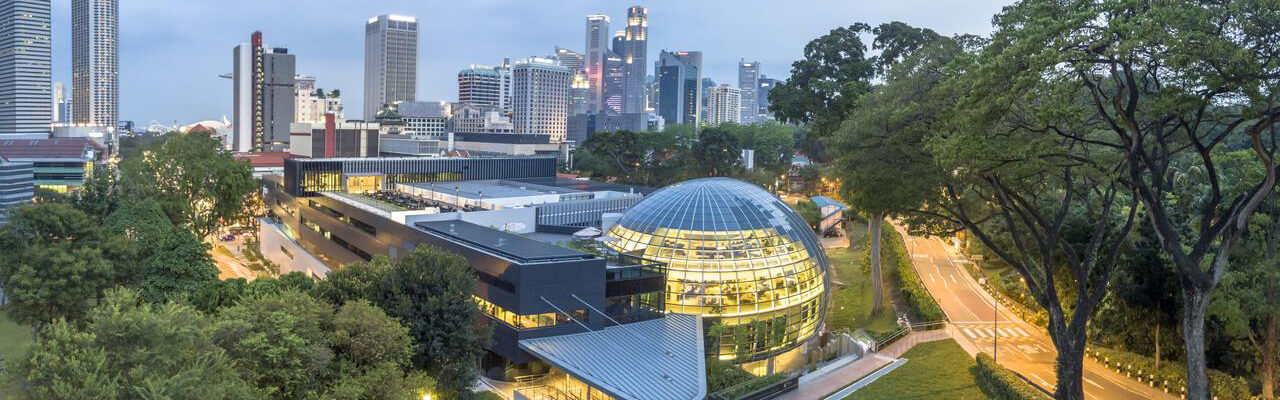
The PhD in Law, Commerce and Technology programme is a direct PhD programme with a normal candidature period of five (5) years and a maximum candidature period of seven(7) years. It emphasizes the interdisciplinary study between law, business, and technology. In particular, students can choose to specialize in either of its two tracks, Law and Commerce, or Law and Technology.
- The Law and Commerce track: focuse on the study of legal and regulatory responses to business, commercial or financial activities.
- The Law and Technology tracks: focuse on the study of legal and regulatory responses to technology developments.
Both tracks are open to students working on topics involving the three-way interaction of law, commerce and technology. PhD students are supposed to determine and declare their tracks no later than the beginning of Year 2.
The curriculum consists of foundation courses, elective courses, a PhD Qualifying Examination (QE), and a PhD dissertation. The coursework and the number of course units are listed below.
Structure Summary
- Foundation courses (6 Credit Units)
- Elective courses (6 Credit Units)
- Completion of PhD Dissertation (28 Credit Units)
| Year | Courses |
|---|---|
| 1 & 2 |
|
| 3 |
|
| 4 |
|
Programme Schedule
| Year | Term 1 | Term 2 | Term 3 | Remarks |
|---|---|---|---|---|
| 1 | - Foundation Courses - Elective Courses | - Foundation Courses - Elective Courses | - Prepare Dissertation Proposal | - Complete Foundation & Elective courses |
| 2 | - Foundation Courses - Elective Courses | - Foundation Courses - Form Dissertation Committee - Prepare Dissertation Proposal | - Prepare Dissertation Proposal - Pass PhD Qualifying Examination (QE) (deadline) | - Complete Foundation & Elective courses - Sit for, and Pass the QE |
| 3 | - Submit Written Dissertation Proposal - Form Dissertation Committee (deadline) - Approval of Dissertation Proposal - Conduct Dissertation Research | - Conduct Dissertation Research - Approval of Dissertation -Proposal (with special permission) | - Conduct Dissertation Research | - Submit Written Dissertation Proposal - Possible Oral Defence of Dissertation Proposal - Get Approved by Dissertation Committee - Conduct Research - Attend High-Quality Conference |
| 4 | - Conduct Dissertation Research | - Conduct Dissertation Research - Submit Written Report of Completed Dissertation Research - Oral Defense of Completed Dissertation | - Revise and Re-submit Dissertation Report | - Oral Defence - Possible Overseas Exchange - Attend High-Quality Conference |
Zhang Wei
Associate Professor of Law
Associate Dean (Postgraduate Curriculum and Teaching)
Programme Director, PhD in Law, Commerce and Technology
LLM and JD Programme Director
The Yong Pung How School of Law (YPHSL) at Singapore Management University (SMU) is a leading institution of legal research and education in the Asia-Pacific region. We have both preeminent law scholars and experienced practitioners in our faculty. Almost all our faculty members have advanced degrees from the top universities in the world including Harvard, Stanford, Oxford and Cambridge.
The PhD in Law, Commerce & Technology programme at YPHSL is the first of its kind in Asia-Pacific and among a handful of interdisciplinary research doctoral programmes offered by law schools around the world. It is built on YPHSL’s research strengths, particularly in the areas of commercial law, and law and technology. It is also a testament to the distinguished SMU tradition of holistic education. Our PhD in Law, Commerce & Technology programme provides seamless access to academic resources throughout SMU.
Apart from its interdisciplinary nature, this programme is also characterised by an industry-oriented focus. We keep close partnerships with major stakeholders in the legal, finance and technology industries. The research questions to be explored by our students in their PhD dissertations are expected to bear material industrial relevance. Students in our programme are, therefore, strongly encouraged to seek advice from industrial mentors and to participate in industrial activities.
We are committed to training scholars who can, in the future, lead research in law. By integrating the knowledge and perspectives from law, commerce and technology, this PhD programme equips students with a deep and broad foundation that can support a high level of academic achievements in their scholarly life. We deliberately keep the size of our PhD classes small to guarantee that our students are provided with close attention and intensive guidance from their supervisors and other faculty members.
SMU provides generous financial support to our PhD students, covering subsidised tuition fees and providing monthly living expenses. Other resources - from books, journals, databases to industry connections - will also be abundantly available to students admitted to our PhD programme.
I believe our programme will prepare you adequately for an exciting and impactful academic career that will reshape the legal infrastructure for tomorrow’s society. I look forward to welcoming you to the SMU PhD in Law, Commerce & Technology.
PhD IN LAW, COMMERCE AND TECHNOLOGY
The legal services industry is being transformed as a result of several factors, including globalization and the rise of new technologies. Additionally, the increasing growth experienced by many Asian countries is leading to many challenges and legal reforms that need to be carefully assessed in order to achieve the expected goals.
Singapore Management University (SMU) Yong Pung How School of Law (YPHSL) proposes to launch a PhD in Law, Commerce and Technology programme in August 2022. This research-degree interdisciplinary PhD programme is designed to provide rigorous academic training to people interested in becoming academics, regulators and industry leaders. It will provide students with a strong background in legal research from an interdisciplinary and comparative perspective. Also, it will adopt an industry-focus and policy-oriented approach with the purpose of producing cutting-edge research that can help regulators, companies and society as a whole face the challenges of today’s changing world.
This programme is targeted to prospects who are dedicated to a deep understanding of law as a social mechanism in the context of commercial activities and technology development. SMU YPHSL welcomes students who are pursuing an academic career in law and other related disciplines, as well as who are exploring opportunities to work for institutions supporting policy making or advocating growth of commercial and technology industries. This programme will recruit students who are recent graduates from law or other related programmes and who have previous working experience in legal or related industries.
It’s imperative that we are generating ideas and thinking that reaches across disciplines both within the legal realm but also more broadly to disciplines including (but not limited to) economics, computing and political science. The support for methodological and focused research in these areas is critical to understanding the ever-increasing interdependencies of these disciplines and the impact they are having on the societies we live and work in.
Goals of the PhD in Law, Commerce and Technology Programme
- To train future thought leaders in academia, judiciary, regulatory agencies and international organizations.
- To prepare students for a career at leading research-oriented institutions.
- To provide students with the training, skills, and methodology needed to conduct industry-relevant and policy-oriented research in law.