SYNOPSIS
An algorithm is a set of instructions for how a computer should accomplish a particular task. They are used by many organizations to make decisions and allocate resources based on large data sets. Studies have shown that big data and machine learning algorithms can bring growth to many industries, such as advertising, healthcare, infrastructure, logistics, transportation, and more. However, the widespread use of algorithms also poses a threat to the rights of average persons and social justice. It has been proven that algorithms could be discriminatory. In the words of mathematician Cathy O’Neil, an algorithm is an “opinion embedded in mathematics.” Scholars have argued that the use of automated decision-making in social service programs creates a "digital poorhouse" that perpetuates the kinds of negative moral judgments that have always been attached to poverty in America. Many of the services we rely on are full of oversights, biases, and downright ethical nightmares, for instance, chatbots that harass women, social media sites that send peppy messages about dead relatives and algorithms that put more black people behind bars. It has also been argued that the combination of private interests in promoting certain sites, along with the monopoly status of a relatively small number of Internet search engines, leads to a biased set of search algorithms that privilege some and discriminate against others. If we go deeper to the roots of the problems, it is fairly easy to ascertain some factors underlying the said phenomena: opaqueness in decision-making process, data monopoly, human biases, dark side of human nature, constant change, lack of adequate legal regulation, etc. It can be argued that it is necessary to view artificial intelligence and algorithms with a cautious and enlightened attitude. Promoting data literacy and algorithmic proficiency, implementing algorithmic accountability, employing policy and legal supervision, cultivating the awareness of the right to data, increasing consumer rights consciousness in the age of algorithms, and overcoming the mentality of techno-utopianism, all these could be explored for the purpose of ascertaining good strategies for protecting individual rights and defending social justice in an algorithmic society at the digital age. After the talk there will be a panel discussion by Professors Mark Findlay and Liu Kung-Chung, which will be moderated by Professor Goh Yihan, Dean of SMU School of Law, Director of Centre for AI and Data Governance.
ABOUT THE SPEAKER
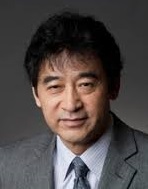
Xingzhong Yu is the Anthony W. and Lulu C. Wang Professor in Chinese Law at the Cornell Law School. His academic interests include social theory, comparative legal philosophy, Chinese law and legal history, constitutional law, new technologies and law, and cultural studies of law. Prior to joining Cornell Law School, he was with the Faculty of Law at the Chinese University of Hong Kong (CUHK) where he taught jurisprudence, constitutional law and Chinese law. He holds an LLM and SJD from Harvard Law School, and while there was a lecturer on law, senior research fellow in East Asian Legal Studies, and visiting associate professor. He has held various visiting academic positions at Beijing University's Department of Law, Northwest University of Politics and Law, Hangzhou Normal University, Columbia Law School, and the Australian National University. He is the author of numerous articles and five books, including Rule of Law and Civil Orders (2006) and Frontiers of Jurisprudence (2014).
PANELLISTS
|

|
Professor Mark Findlay
Deputy Director, Centre for AI and Data Governance
Singapore Management University
|
 |
Professor Liu Kung-Chung
Director, Applied Research Centre for Intellectual Assets and the Law in Asia
Singapore Management University
|
|
MODERATOR
|

|
Dean Goh Yihan
Director, Centre for AI and Data Governance
Singapore Management University
|
FEES
a. Seminar fee
Seminar fee of S$175* (inclusive of GST) applies.
b. Group discount fee
Group discount fee of S$160* (inclusive of GST) applies if there are at least 10 participants from the same organisation.
c. SMU Alumni fee (for LLB / JD / LLM graduates)
Seminar fee of S$160* (inclusive of GST) applies for SMU LLB / JD / LLM Alumni.
*Please note that there will be no refund of any fees should the participant cancel the registration/ fail to attend the seminar. However, registration is transferable. Notice of any change in participant should be sent to the Academy via email: smulawacademy@smu.edu.sg, by 9 April 2019.
SMU School of Law reserves the right to cancel or postpone any event. In such case, we will arrange for the refund of seminar fees paid.
|
|
 |
|
Registration closes on 9 April 2019, subject to availability of seats.
|
DATE
16 April 2019 (Tuesday)
|
| |
|
TIME
2:30 PM - 5:00 PM
(Registration starts at 2:15 PM)
|
| |
VENUE
Level 1, David Marshall Moot Court
Singapore Management University
School of Law
55 Armenian Street
Singapore 179943
|
| |
PUBLIC CPD POINTS
2.5 points (provided SILE's CPD Attendance Policy is complied with)
|
| |
PRACTICE AREA
Others/multi-disciplinary
|
| |
TRAINING LEVEL
General
|
| |
LOCATION MAP
Click HERE for map
|
| |
PROGRAMME
|
| 2:15 PM |
Registration |
| |
|
| 2:30 PM |
Seminar by Prof Xingzhong Yu |
| |
|
| 3:30 PM |
Tea Break |
| |
|
| 3:45 PM |
Seminar by Prof Xingzhong Yu |
| |
|
| 4:45 PM |
Panel discussion |
| |
|
| 5:00 PM |
End of Event |
|
|