Most jurisdictions tax nonresidents only on their domestically sourced income. However, determining where income is sourced has been a longstanding headache for tax students, academics, policymakers, and industry stakeholders — though lawyers may view it as a bonanza. As Professor Avi-Yonah observed, source rules “are a wonderful thing for lawyers and something that causes economists to despair,” not least because “most tax economists today believe that income does not have a single source that can be pinpointed” (Avi-Yonah, 2007). Professor Arnold similarly notes that “the concept of source is poorly developed in domestic tax legislation and tax treaties” (Arnold, 2023).
Does “source” refer to the place where value is created, where goods or services are consumed, or where the outbound payment is made? A relatively common perception is that active income is sourced in the country where contributions to income generation occur, whereas passive income is sourced in the payor’s country. However, with the rapid development of the digital economy, there appears to be an increasing trend towards sourcing active income to the payor’s jurisdiction as well - also known as destination-based tax. Digitalisation also raises the question of whether value realisation or sales activity should be regarded as contributors to income generation.
Drawing on lessons from treaty practice (particularly the OECD and UN Model Conventions) and the economic allegiance principle, I will make the following arguments:
SPEAKER

Dr Qiang Cai
Lecturer, School of Law
University of Aberdeen
Dr Qiang Cai is a Lecturer in Tax Law and Commercial Law in the School of Law at the University of Aberdeen, where he also serves as Director of the Aberdeen Centre for Commercial Law. He has published extensively in the field of international tax law, with a particular interest in theorising the international tax system. His research adopts an interdisciplinary approach that integrates law, economics, and political theories. Qiang is a member of the International Law Association (ILA) International Tax Law Committee.
CHAIR
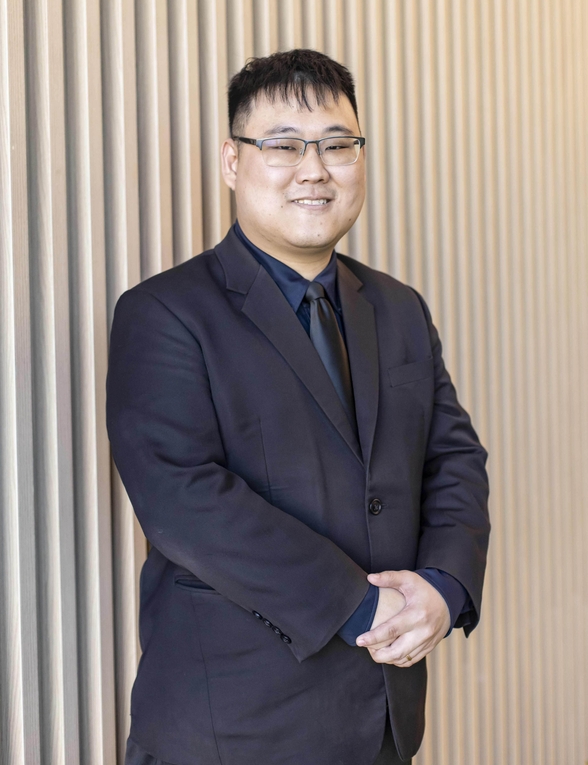
Dr Vincent Ooi
Assistant Professor of Law
Singapore Management University
DETAILS
Date: 29 January 2026, Thursday
Time: 12pm to 1pm [Registration commences from 11.30am and Lunch will be provided]
Venue: Function Lounge 4-02, Level 4, Yong Pung How School of Law, Singapore Management University
REGISTRATION
Please click HERE to register. Registration closes on 16 January 2026, 5pm SGT or when the workshop is fully subscribed, whichever is earlier.
Successful registrant will receive a confirmation email by 20 January 2026 from ccla@smu.edu.sg to confirm your registration.
ORGANISERS
About Singapore Tax Academy Research Initiative (STARI)

The Singapore Tax Academy Research Initiative (STARI) conducts leading tax law research in a rapidly developing international tax landscape, while also building domestic tax research capacity, developing strong academic networks, and bringing the best in international tax thought-leadership to the tax profession in Singapore. In addition to its research activities, STARI provides training in academic research and writing, and works with the world’s best tax law academics to develop tax professionals.
https://ccla.smu.edu.sg/stari
About Tax Academy of Singapore

The Tax Academy of Singapore is a not-for-profit institution set up by the Inland Revenue Authority of Singapore in collaboration with the international accounting firms – Deloitte & Touche, Ernst & Young, KPMG and PricewaterhouseCoopers, the Singapore Chartered Tax Professionals, the Institute of Singapore Chartered Accountants and the Law Society of Singapore.
As a leading hub for tax excellence and a network of networks, Tax Academy collaborates with leaders in the industry, academia and the government to develop and deliver structured tax training programmes, regular seminars and conferences. Through these platforms, tax professionals can stay current with global developments while enhancing their professional competency, knowledge and capabilities. By fostering exchanges between industry experts, academics and government officials from both local and international spheres, Tax Academy cultivates an environment of continuous learning and knowledge sharing.
https://www.taxacademy.sg