New Zealand’s Inland Revenue, like many sophisticated revenue authorities globally, is actively embracing the use of artificial intelligence (AI) to enhance its digital platforms, increase the levels of taxpayer compliance, and create greater efficiencies with respect to resource use. The use of AI comes with benefits and risks, which need to be very carefully balanced so as to ensure the rights of taxpayers and citizens are protected. While the AI evolution cannot be ignored, the New Zealand government has appropriately recommended a cautious but potentially risky approach with extensive pre-testing before AI products are utilised externally. However, there is no intention to create bespoke legislation to protect New Zealanders’ rights, but to rely on existing legislation concerning privacy and other rights. This paper positions Inland Revenue, one of the more advanced public sector organisations in New Zealand, as adopting AI within the wider New Zealand public service mandate and globally within Organisation for Economic Cooperation and Development (OECD) guidance. The paper concludes that the early evidence suggests that Inland Revenue is taking a cautious approach, although there is cause for concern with the rapid rolling out of Generative AI (Gen AI) tools and previous occasions when this cautious approach has not been adopted (such as with the data hashing experiment).
SPEAKER

Dr Adrian Sawyer
Professor of Taxation
University of Canterbury
Dr Adrian Sawyer is Professor of Taxation at the University of Canterbury (UC) in New Zealand and Extraordinary Professor at the University of South Africa. Adrian has spent 35 years at UC undertaking teaching and research principally in Taxation, as well as aspects of Commercial Law and Introductory Accounting. He holds an SJD from the University of Virginia, and MCom(Hons), BCom and LLB degrees from UC. He is a FCA (CA-ANZ), FCPA (CPA Australia), and Barrister and Solicitor of the High Court (NZ). Adrian is chair of the editors of the New Zealand Journal of Taxation Law and Policy and serves on numerous editorial boards. His research interests include tax administration and compliance, tax policy, taxpayers’ rights, and international taxation. He is currently supervising seven PhD students across a wide range of topics.
CHAIR
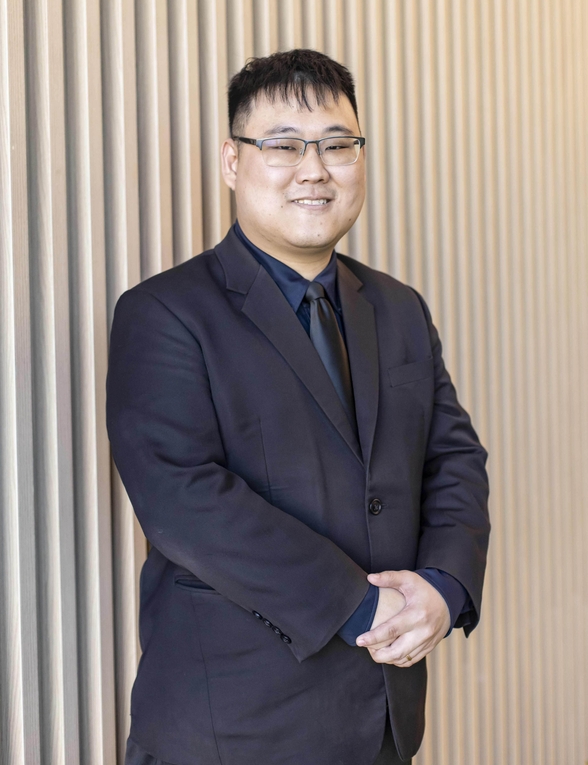
Dr Vincent Ooi
Assistant Professor of Law
Singapore Management University
DETAILS
Date: 24 November 2026, Tuesday
Time: 12.30pm to 1.30pm [Registration commences from 12pm and Lunch will be provided]
Venue: Training Room 3, Tax Academy of Singapore Hub, #01-03, Revenue House [55 Newton Rd, Singapore 307987]
REGISTRATION
Registration Fees:
For Public - $50 (subject to prevailing GST)
Please click HERE to register.
For SMU Staff and Students - Complimentary
Please click HERE to register.
Registration closes on 13 November 2026, 5pm SGT or when the workshop is fully subscribed, whichever is earlier.
ORGANISERS
About Singapore Tax Academy Research Initiative (STARI)

The Singapore Tax Academy Research Initiative (STARI) conducts leading tax law research in a rapidly developing international tax landscape, while also building domestic tax research capacity, developing strong academic networks, and bringing the best in international tax thought-leadership to the tax profession in Singapore. In addition to its research activities, STARI provides training in academic research and writing, and works with the world’s best tax law academics to develop tax professionals.
https://ccla.smu.edu.sg/stari
About Tax Academy of Singapore

The Tax Academy of Singapore is a not-for-profit institution set up by the Inland Revenue Authority of Singapore in collaboration with the international accounting firms – Deloitte & Touche, Ernst & Young, KPMG and PricewaterhouseCoopers, the Singapore Chartered Tax Professionals, the Institute of Singapore Chartered Accountants and the Law Society of Singapore.
As a leading hub for tax excellence and a network of networks, Tax Academy collaborates with leaders in the industry, academia and the government to develop and deliver structured tax training programmes, regular seminars and conferences. Through these platforms, tax professionals can stay current with global developments while enhancing their professional competency, knowledge and capabilities. By fostering exchanges between industry experts, academics and government officials from both local and international spheres, Tax Academy cultivates an environment of continuous learning and knowledge sharing.
https://www.taxacademy.sg